人體腸道棲息著約 100 兆個微生物,其基因總量是人類基因組的 150 倍。現代醫學已確認,腸道微菌叢(Gut Microbiota,腸道內微生物群落)透過「腸腦軸線(Gut-Brain Axis,腸道與大腦的雙向溝通)」影響情緒、代謝甚至神經退化過程。但市面上益生菌產品琳瑯滿目,真的每瓶都值得買嗎?
本文你會學到:
- 益生菌(probiotics)、益生元(prebiotics)、後生元三者的角色與飲食來源
- 菌株選擇比 CFU 數量更重要的理由
- 腸腦軸線的實際機制——腸道如何影響你的情緒
- 哪些人不適合自行補充高劑量益生菌
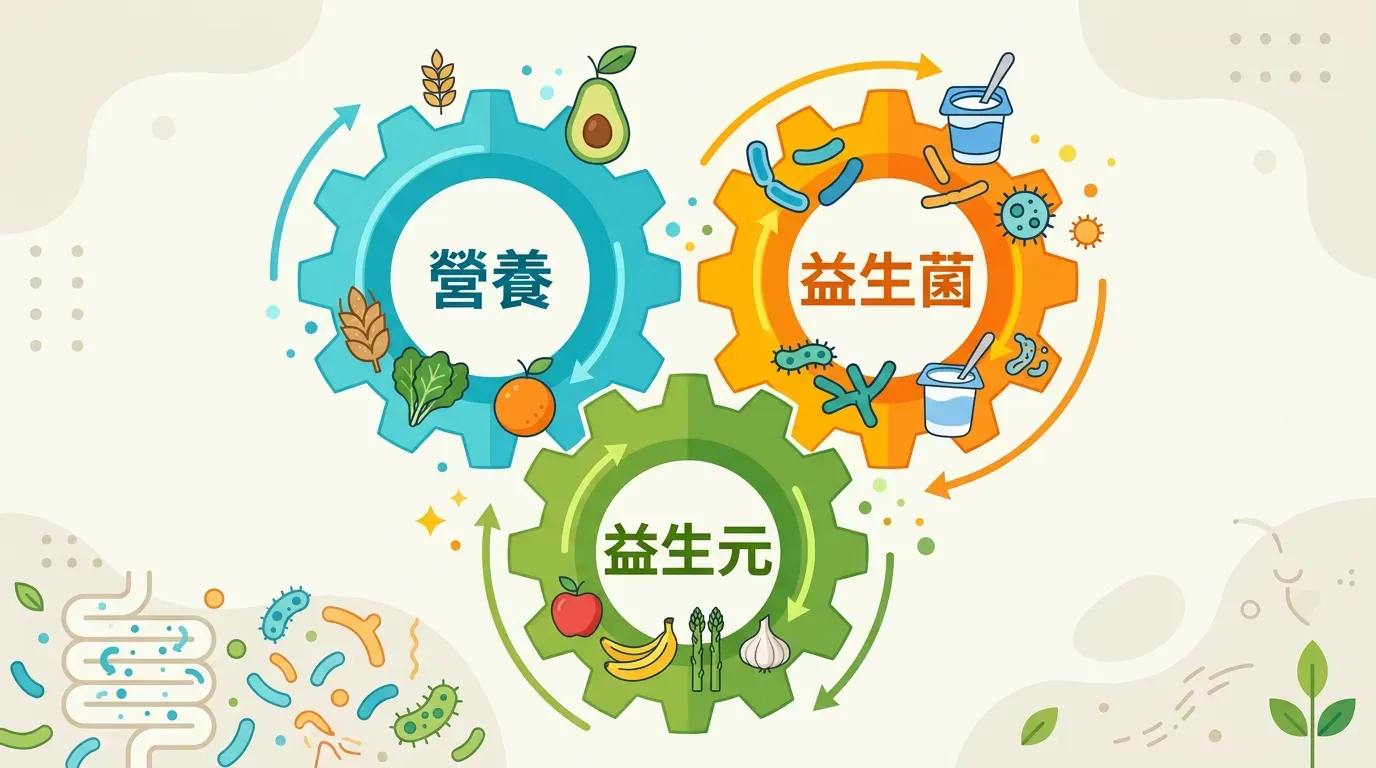
腸道健康的「金三角」:三種成分,一個系統
| 成分 | 定義與功能 | 關鍵代表與來源 |
|---|---|---|
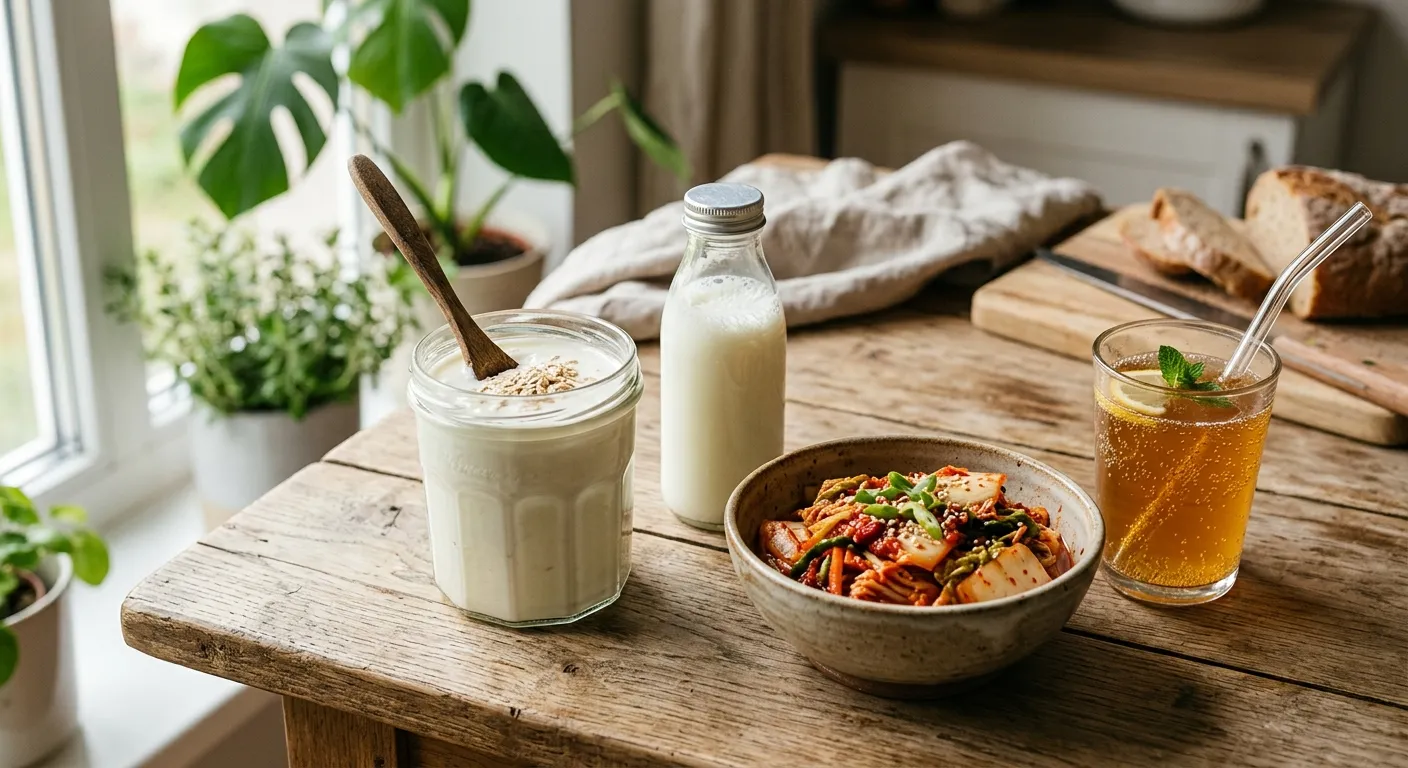
| 益生菌 | 有益宿主健康的活菌。 | 乳酸桿菌、雙歧桿菌(優格、泡菜)。 |
| 益生元 | 益生菌的「燃料」,不可消化纖維。 | 菊粉、抗性澱粉(洋蔥、香蕉、燕麥)。 |
| 後生元 | 益生菌代謝產物(如丁酸)。 | 短鏈脂肪酸(SCFAs,Short-chain fatty acids),提供腸細胞能量。 |
| 合生元 | 益生菌與益生元組合。 | 同時攝取益生菌產品與高纖食物。 |
🧪 SCFAs 的威力
丁酸強化腸黏膜、抗發炎;腸道菌製造約 90% 血清素,透過腸神經系統間接影響焦慮與情緒;70% 免疫細胞在腸道與菌叢互動。
🥗 優化策略
多樣性優先:地中海飲食 30+ 種植物;抗生素後補 S. boulardii;針對性菌株如 L. rhamnosus GG、B. longum;益生菌需搭配益生元才能發揮最大效果。
白話說:有初步證據,但研究規模還小,別當成定論。
證據分數 60 分(滿分 100) · 發布狀態:可參考,但附帶但書
- US FDA 態度:持保留
展開原文引用
「FDA has not approved any probiotic product for use as a drug or biological product in infants of any age」 - EU EFSA 態度:不支持
展開原文引用
「a cause and effect relationship had not been established between the consumption of a combination of bacterial strains and reduction of gastro-intestinal discomfort」 - UK NHS 態度:持保留
展開原文引用
「There's some evidence that probiotics may be helpful in some cases, such as helping to ease some symptoms of irritable bowel syndrome (IBS). But there's little evidence to support many health claims made about them.」
評級由多源健康證據引擎彙整(FDA/EFSA/NHS/TFDA/WHO/PubMed/NIH ODS 等多個官方與權威來源)。 產製日期 2026-06-01 · 版本 v32。本評級僅供衛教參考,不取代醫師診斷與處方。 · 查看此成分的完整評級 · 📊 證據資料庫原始頁面
白話說:目前沒有可靠的人體研究,無法下定論。
📝 編輯說明:益生菌對「便秘」是 B 附警語、對「腸躁症」卻評為 B disputed——同一支補充品在不同腸胃情境的證據強度差很多,這就是為什麼挑菌株、看用途比看「益菌數」重要。
證據分數 54 分(滿分 100) · 發布狀態:證據尚不足以下判斷
- US FDA 態度:持保留
展開原文引用
「FDA has not approved any probiotic product for use as a drug or biological product in infants of any age」 - EU EFSA 態度:不支持
展開原文引用
「a cause and effect relationship had not been established between the consumption of a combination of bacterial strains and reduction of gastro-intestinal discomfort」 - UK NHS 態度:持保留
展開原文引用
「There's some evidence that probiotics may be helpful in some cases, such as helping to ease some symptoms of irritable bowel syndrome (IBS). But there's little evidence to support many health claims made about them.」
評級由多源健康證據引擎彙整(FDA/EFSA/NHS/TFDA/WHO/PubMed/NIH ODS 等多個官方與權威來源)。 產製日期 2026-06-01 · 版本 v32。本評級僅供衛教參考,不取代醫師診斷與處方。 · 查看此成分的完整評級 · 📊 證據資料庫原始頁面
短鏈脂肪酸的三大作用
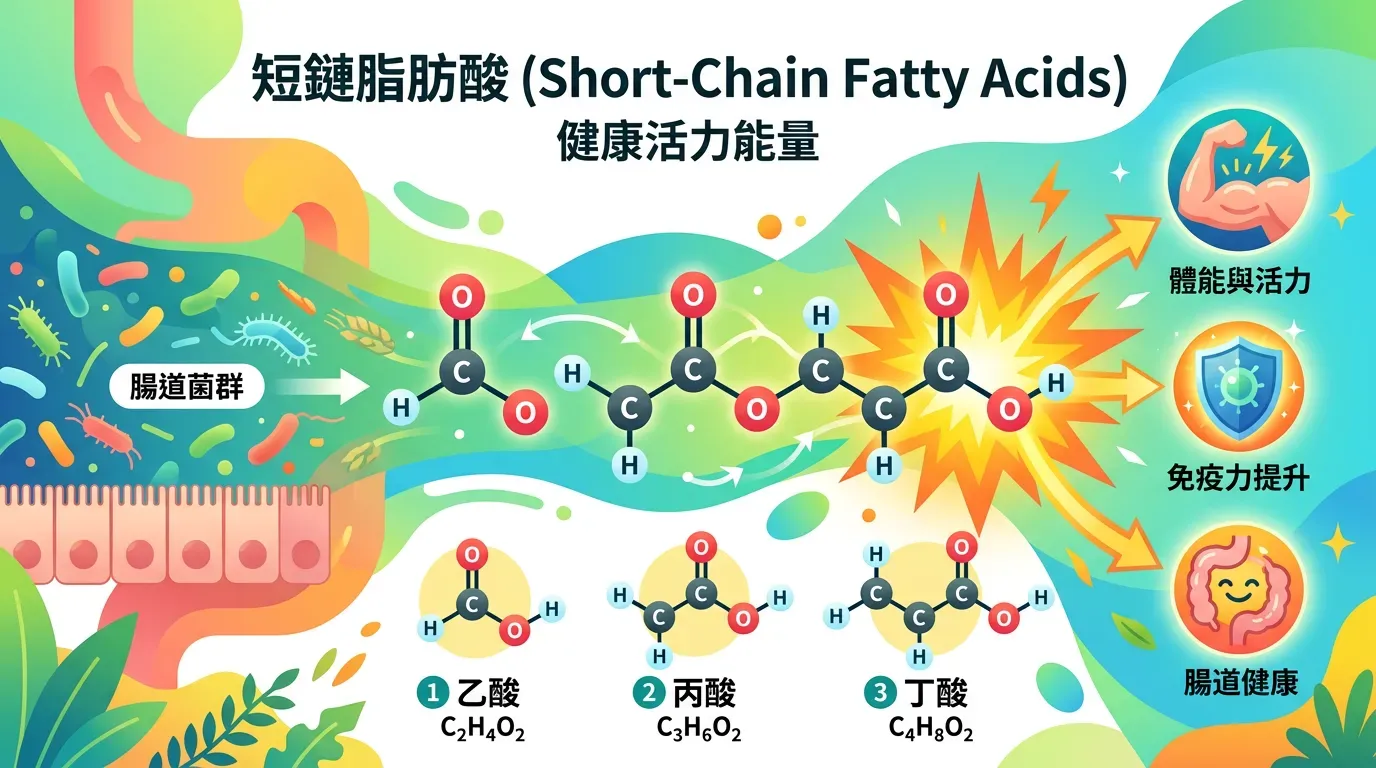
當益生元(如抗性澱粉)被腸道菌發酵時,會產生丁酸(Butyrate,短鏈脂肪酸之一)、乙酸與丙酸:
- 抗發炎屏障:丁酸是腸壁細胞的主要能量來源,能強化腸道黏膜,近年研究顯示有助預防腸道通透性升高所引發的全身性發炎[^15]。
- 情緒調節(Psychobiotics):腸道中的腸嗜鉻細胞負責製造全身約 90% 的血清素,但這些血清素無法穿越血腦屏障直接影響大腦。健康的菌叢能透過腸神經系統與迷走神經,間接調節壓力荷爾蒙,進而影響焦慮與情緒。
- 免疫訓練:腸道中 70% 的免疫細胞透過與菌叢的互動,學習辨別敵友,協助預防過敏與發炎反應。
白話說:有初步證據,但研究規模還小,別當成定論。
證據分數 59 分(滿分 100) · 發布狀態:可參考,但附帶但書
- US FDA 態度:持保留
展開原文引用
「FDA has not approved any probiotic product for use as a drug or biological product in infants of any age」 - EU EFSA 態度:不支持
展開原文引用
「a cause and effect relationship had not been established between the consumption of a combination of bacterial strains and reduction of gastro-intestinal discomfort」 - UK NHS 態度:持保留
展開原文引用
「There's some evidence that probiotics may be helpful in some cases, such as helping to ease some symptoms of irritable bowel syndrome (IBS). But there's little evidence to support many health claims made about them.」
評級由多源健康證據引擎彙整(FDA/EFSA/NHS/TFDA/WHO/PubMed/NIH ODS 等多個官方與權威來源)。 產製日期 2026-06-08 · 版本 v33。本評級僅供衛教參考,不取代醫師診斷與處方。 · 查看此成分的完整評級 · 📊 證據資料庫原始頁面
了解短鏈脂肪酸的角色後,下一步是如何在日常生活中主動調整菌叢組成。
微菌叢優化策略:四個可執行的方向
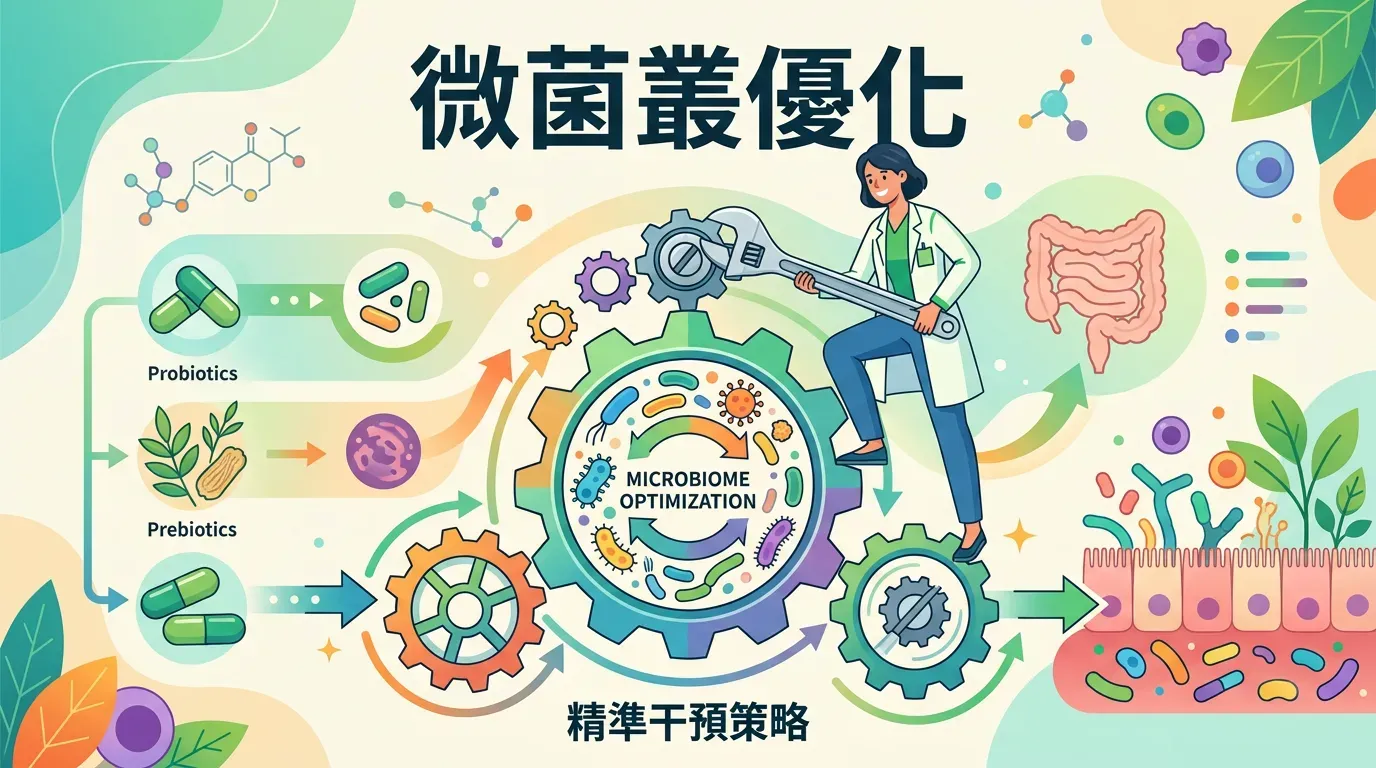
- 多樣性優先:不要只補充單一菌株。透過多元飲食攝取超過 30 種植物源食物,是提升菌叢多樣性最直接的方式。
- 抗生素後的修復:服用抗生素期間,可諮詢醫師補充 S. boulardii(布拉氏酵母菌),有助降低抗生素相關腹瀉風險,並在療程結束後重建菌群。
白話說:有初步證據,但研究規模還小,別當成定論。
證據分數 67 分(滿分 100) · 發布狀態:可參考,但附帶但書
- US FDA 態度:持保留
展開原文引用
「FDA has not approved any probiotic product for use as a drug or biological product in infants of any age」 - EU EFSA 態度:不支持
展開原文引用
「a cause and effect relationship had not been established between the consumption of a combination of bacterial strains and reduction of gastro-intestinal discomfort」 - UK NHS 態度:持保留
展開原文引用
「There's some evidence that probiotics may be helpful in some cases, such as helping to ease some symptoms of irritable bowel syndrome (IBS). But there's little evidence to support many health claims made about them.」
評級由多源健康證據引擎彙整(FDA/EFSA/NHS/TFDA/WHO/PubMed/NIH ODS 等多個官方與權威來源)。 產製日期 2026-06-09 · 版本 v10。本評級僅供衛教參考,不取代醫師診斷與處方。 · 查看此成分的完整評級 · 📊 證據資料庫原始頁面
- 針對性菌株:L. rhamnosus GG 在免疫調節與腹瀉預防方面有較充分的臨床數據;B. longum 在改善壓力反應方面顯示出潛力[^36]。
白話說:證據中等,有一定的支持。
證據分數 72 分(滿分 100) · 發布狀態:可參考,但附帶但書
- 第三方營養資料庫(國際)
展開原文引用
「Probiotics are microorganisms that can have a positive effect on health. (Examine catalogs 'Probiotics' as an umbrella entry; specific strains like L. rhamnosus GG are not individually graded.)」 - US FDA 態度:支持
展開原文引用
「GRN No. 231 — Notified Substance: Lactobacillus casei subsp. rhamnosus strain GG. Intended Use: Ingredient in term infant formula, at levels not to exceed 10^8 colony forming units per gram of powdered formula. Notifier: Mead Johnson & Company. Agency Response: FDA has no questions (closure date: May 29, 2008).」 - EU EFSA 態度:持保留
展開原文引用
「The bacterial species L. rhamnosus (now Lacticaseibacillus rhamnosus) is considered by EFSA to be suitable for the qualified presumption of safety (QPS) approach to safety assessment. However, the EFSA Panel on Dietetic Products, Nutrition and Allergies concluded that a cause and effect relationship has not been established between the consumption of Lactobacillus rhamnosus GG (ATCC 53103, LGG)…」
評級由多源健康證據引擎彙整(FDA/EFSA/NHS/TFDA/WHO/PubMed/NIH ODS 等多個官方與權威來源)。 產製日期 2026-06-09 · 版本 v7。本評級僅供衛教參考,不取代醫師診斷與處方。 · 📊 證據資料庫原始頁面
避坑指南:誰不適合自行補充?
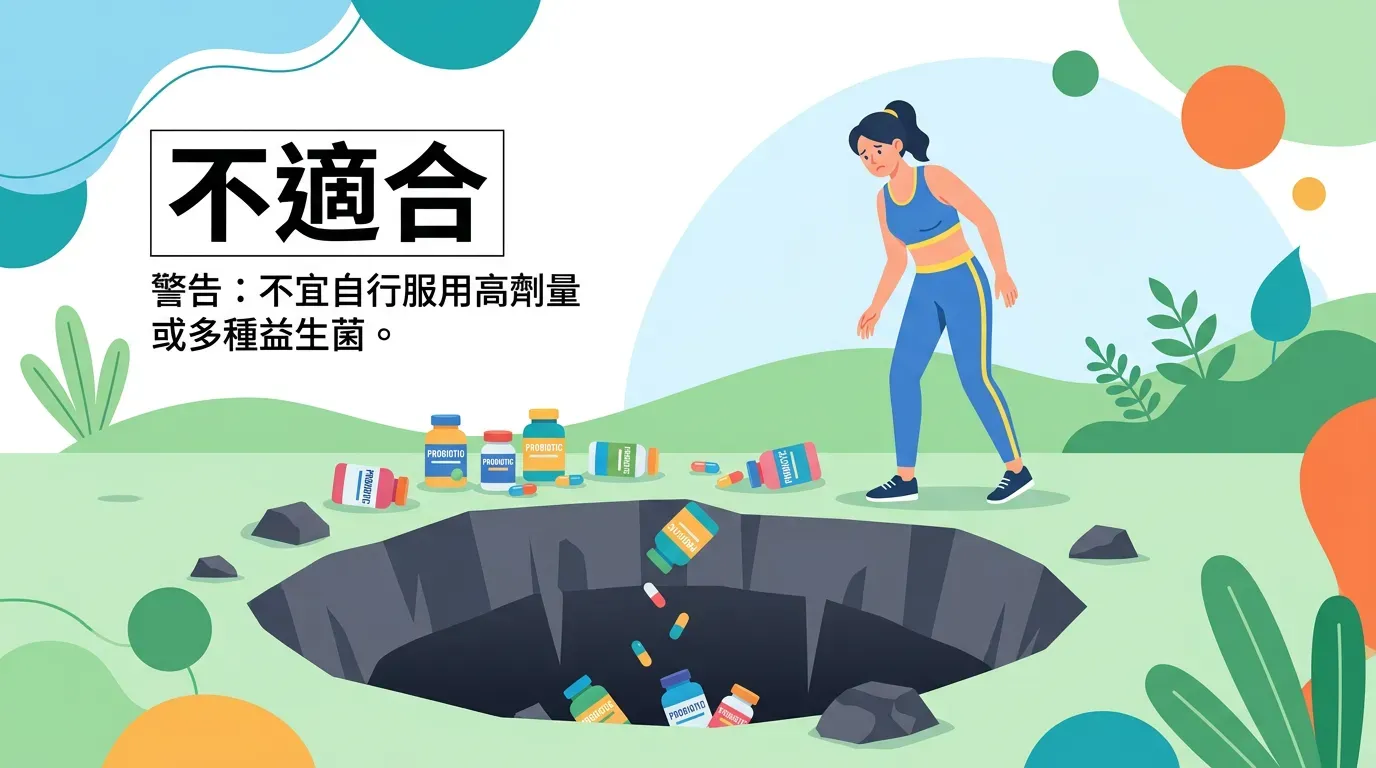
嚴重免疫低下(如化療中、器官移植後)、急性胰臟炎、留置中央靜脈導管的人不宜自行補充活菌。早產兒與重症住院者須經醫師評估。若正在服用抗生素,服藥時間與益生菌間隔至少 2 小時,詳情請諮詢醫師。
結論
腸道健康是全身健康的調度中心。透過發酵食物(益生菌來源)搭配高纖原型食物(益生元),可以主動調節體內的微生態平衡——這不只是改善便秘的手段,更是保護免疫系統與腸腦軸線長期運作的基礎。如果你想從飲食層面打好腸道健康的基本功,建議從日常膳食結構開始調整。
與其追求每罐幾百億 CFU,不如先問:你的飲食夠多樣嗎?纖維攝取夠嗎?這兩個問題的答案,往往比補充品的選擇更決定結果。
常見問題(FAQ)
益生菌要吃幾億 CFU 才有效?
研究使用的有效劑量通常落在 10 億至 100 億 CFU(菌落形成單位)之間,但菌株的選擇遠比數字重要。Lactobacillus rhamnosus GG 在腹瀉與旅行腸胃炎方面的研究最為充分;Bifidobacterium longum 較多用於便秘和腸躁症;Lactobacillus acidophilus 則與乳糖消化有關。買前先確認要改善什麼問題,再選對應菌株。
益生菌要飯前還是飯後吃?
目前研究顯示,隨餐或餐後 30 分鐘內服用存活率最高,因為食物能緩衝胃酸,讓更多菌株順利通過胃部到達腸道。空腹時胃酸最強,腸溶衣膠囊型產品稍能改善這個問題,但整體而言隨餐服用仍是最省事的選擇。
有乳糖不耐症可以吃優格補充益生菌嗎?
可以,通常比鮮奶好耐受。優格中的乳酸菌會分解部分乳糖,多數乳糖不耐症患者可以耐受。若對乳製品完全過敏或嚴重不耐,可改選豆漿優格、椰奶克菲爾,或直接使用無乳製品的益生菌補充品。
益生菌和抗生素可以一起吃嗎?
不建議同時服用,因為抗生素會殺死益生菌。建議在抗生素服藥後至少 2 小時再服用,整個療程結束後繼續補充 1–2 週有助修復菌群。研究顯示,服用益生菌能降低抗生素相關腹瀉的發生率。
益生菌需要長期吃嗎?
效果通常是暫時性的——停止補充後,外來菌株在腸道中通常無法長期定殖,2–4 週後會自然消退。長期的腸道健康更依賴每日飲食的多樣性,而非持續補充益生菌。若有特定需求(如出發前預防旅行者腹瀉),可在需求期集中補充;若只是一般保健,不一定需要天天吃。
相關文章
參考文獻
以下文獻最後檢索:2026-02。
- Nature Reviews Gastroenterology & Hepatology. (2024). Consensus statement on the scope of probiotics.
- Cell Host & Microbe. (2024). Short-chain fatty acids as metabolic signals in human health.
- Trends in Neurosciences. (2024). Psychobiotics: New frontiers in gut-brain axis research.
- Nutrients. (2025). Prebiotics and microbiome diversity: A long-term clinical assessment.
參考資料
- Probiotics and prebiotics: What you should know — Mayo Clinic
- Prebiotics: Understanding their role in gut health — Harvard Health
- Probiotics — Health Professional Fact Sheet — NIH Office of Dietary Supplements
- Effects of Probiotics, Prebiotics, and Synbiotics on Human Health — PMC(2017)
自動推薦:你可能也會滿意

本文僅供參考,不構成醫療建議。如有健康疑慮,請諮詢專業醫療人員。 了解更多